What the Research Says About Maintaining Weight After a GLP
When I was completing my post-doc at Uniformed Services University, I reviewed data on weight regain after stopping a diet. This was called weight cycling and was a very common phenomenon due to biological, psychological, behavioral, and environmental factors. This data was all pre-GLP medications. Today, GLP-1 medications have become one of the most significant advances in obesity treatment. These medications can lead to meaningful weight loss, improve cardiometabolic risk factors, and reduce appetite and food-related preoccupation for many patients.
But an important clinical question remains: what happens when these medications are stopped? Does the weight cycling phenomenon that I reviewed exist with GLP users? Spoiler alert….yes, it does.
A recent article in EClinicalMedicine, “Weight maintenance after discontinuation of GLP-1 therapies,” addresses this question directly. The authors review the current evidence and highlight a central concern: although GLP-1 therapies can be highly effective during active treatment, discontinuation is often followed by weight regain and a partial reversal of metabolic benefits.
Why This Question Matters
GLP-1 medications are increasingly used for long-term weight management, but many people discontinue them. Reasons may include cost, insurance coverage, side effects, medication access, personal preference, or clinical guidance.
The article emphasizes that weight regain after discontinuation should not be understood as a failure of willpower. Instead, it reflects the biological and behavioral complexity of obesity treatment.
What the Research Shows
The authors summarize evidence showing that weight regain after stopping GLP-1 therapy is common. In clinical trials and follow-up studies, many participants regain a meaningful portion of the weight they lost once the medication is withdrawn.
This pattern is consistent with what is known about weight regulation more broadly. When weight is lost, the body often responds with increased appetite, changes in energy expenditure, and hormonal adaptations that promote regain. GLP-1 medications help counter some of these pressures while they are being taken. When the medication is stopped, those appetite and metabolic signals may return.
The article also notes that cardiometabolic improvements may reverse after discontinuation. This may include changes in weight, blood pressure, glucose regulation, cholesterol, and other markers that improved during treatment.
The Biological Explanation
The article highlights that GLP-1 therapies work through several biological pathways. They affect appetite, fullness, gastric emptying, glucose regulation, and reward-related eating behavior.
When treatment stops, the medication’s effects on these systems are reduced or removed. As a result, people may experience:
increased hunger
reduced fullness
return of food noise
stronger cravings
changes in blood sugar regulation
gradual or rapid weight regain
This is one of the most important takeaways from the article: regain is not simply a behavioral problem. It is often a predictable biological response to stopping a medication that was actively helping regulate appetite and metabolism.
Lifestyle Support Matters…A Lot
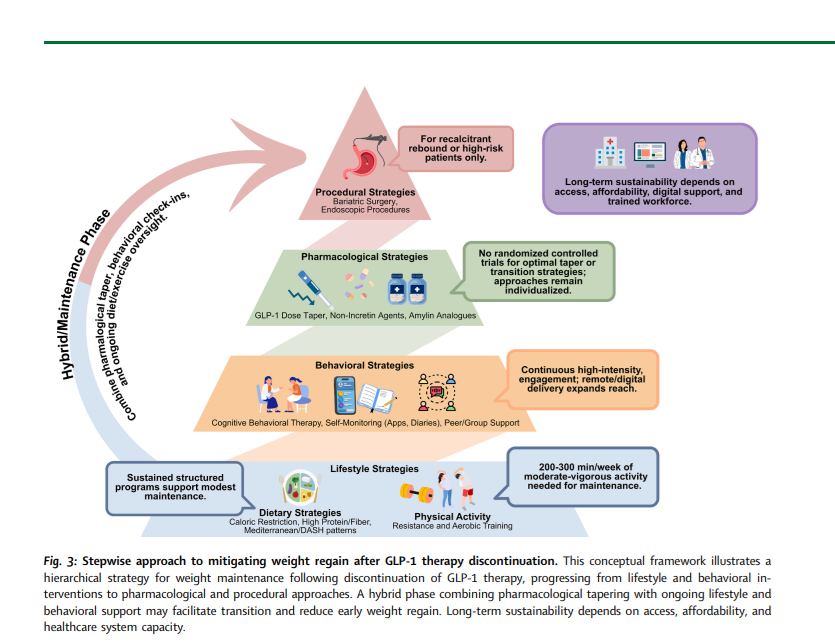
While the article makes clear that biology plays a major role, it also emphasizes the importance of lifestyle and behavioral supports.
Nutrition, physical activity, resistance training, sleep, and ongoing clinical monitoring may all help support maintenance. These strategies may not fully replace the effects of medication for every person, but they can help reduce risk of regain and support long-term health.
The article points toward the need for structured transition plans when GLP-1 therapy is reduced or discontinued. Rather than stopping medication without a plan, patients may benefit from a coordinated approach that includes medical follow-up, behavioral support, and attention to cardiometabolic markers.
Medication Discontinuation May Need to Be Individualized
One of the key clinical implications of the article is that there may not be a single best approach to stopping GLP-1 therapy.
Some patients may need long-term treatment to maintain benefits. Others may be able to reduce their dose, transition to another medication, or discontinue with intensive lifestyle and behavioral support. The right approach depends on the individual’s medical history, weight trajectory, metabolic risk, side effects, preferences, access, and treatment goals.
The article supports a more flexible model of care rather than an all-or-nothing view of GLP-1 treatment.
What This Means for Patients
For patients, the article offers an important and compassionate message: if weight regain happens after stopping a GLP-1 medication, it does not mean the person failed.
It means the body is responding to the removal of a treatment that was helping regulate appetite, fullness, and metabolism.
This distinction matters. Shame and self-blame often make long-term health behavior change harder. A more useful response is to treat weight regain as clinical information. It may signal the need for more support, a different medication strategy, stronger behavioral systems, or closer monitoring.
What This Means for Health Care Providers
For providers, the article highlights the importance of planning for maintenance from the beginning of treatment. This is so important!
Patients may benefit from conversations about:
whether GLP-1 therapy is intended to be short-term or long-term
what might happen if the medication is stopped
how weight, appetite, and metabolic markers will be monitored
what lifestyle supports should be in place before discontinuation
whether dose reduction or transition therapy may be appropriate
how to respond early if weight regain begins
The article suggests that maintenance should not be treated as an afterthought. It is a core part of obesity care.
The Bottom Line
The main message of “Weight maintenance after discontinuation of GLP-1 therapies” is that stopping GLP-1 treatment often leads to weight regain and possible reversal of metabolic improvements. This reflects the chronic biological nature of obesity, not a lack of discipline.
The article supports a long-term, individualized approach to obesity treatment. For some people, that may include continued medication. For others, it may involve dose adjustments, alternative treatments, or intensive lifestyle and behavioral support.
Most importantly, the research reinforces that weight maintenance after GLP-1 therapy requires a plan. Patients should not be left to navigate discontinuation with willpower alone.
Sustainable weight maintenance is not simply about trying harder. It is about understanding biology, building support, monitoring changes, and creating a realistic long-term strategy.