Why You Eat When You’re Not Hungry: The Connection Between Stress, Your Nervous System, and Food
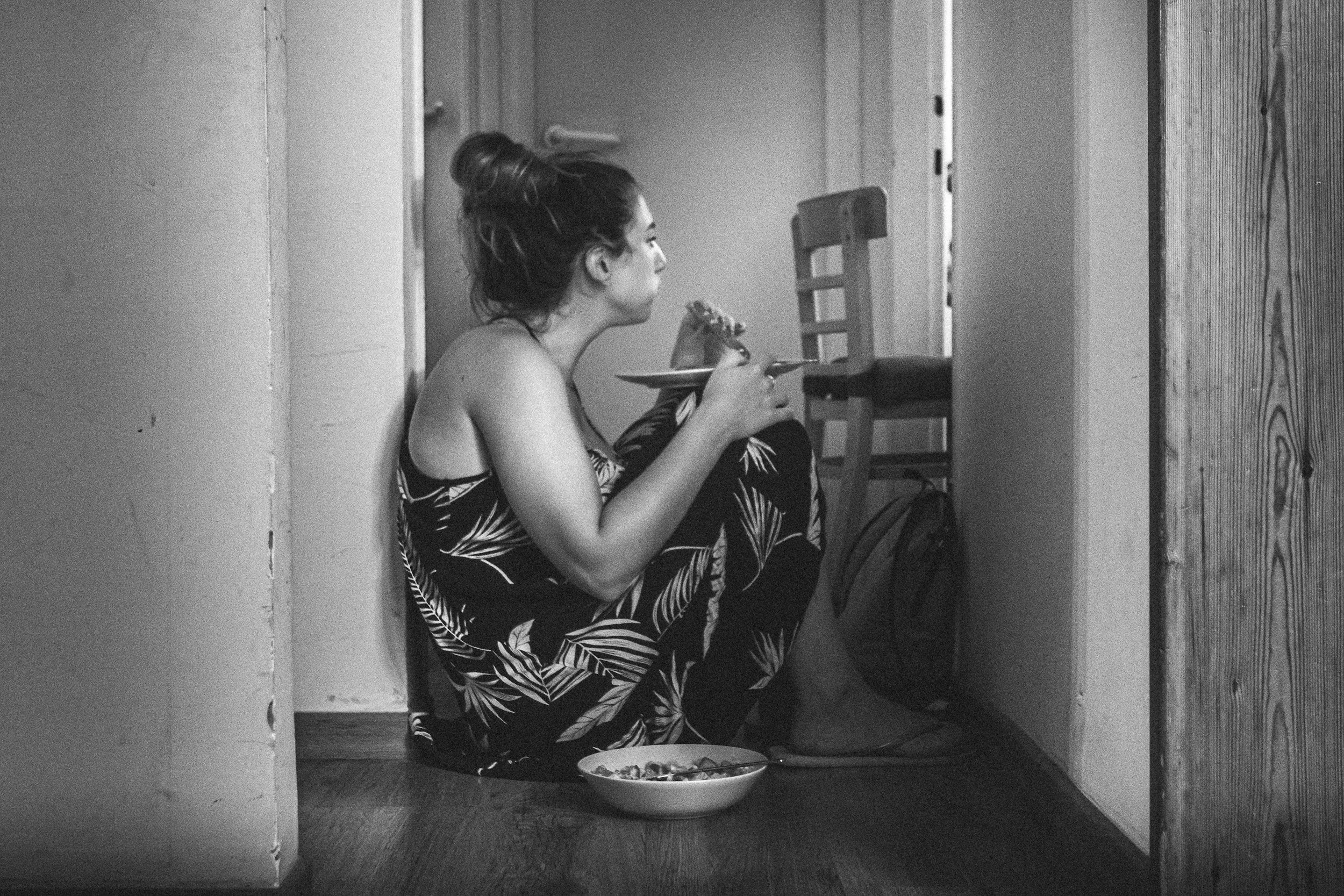
Have you ever finished dinner, felt physically full, and then found yourself standing in the kitchen looking for something to eat?
Maybe you weren't hungry.
You may not have even really wanted the food.
But you wanted something.
Something sweet. Something crunchy. Something comforting. Something that would make you feel a little better after a long day.
And then you eat.
For a few minutes, you feel calmer, more satisfied, or simply distracted from whatever was bothering you.
Then, perhaps, comes the guilt and shame.
"Why did I eat that? I wasn't even hungry."
"I have no willpower."
"I really need to get better at controlling myself."
If this sounds familiar, there's another way to understand what's happening:
Sometimes we eat not because our bodies need food, but because our nervous systems need relief.
And that distinction can change the way you approach emotional eating, stress eating, and those seemingly irresistible urges to eat when you're not physically hungry.
Eating Isn't Always About Hunger
We tend to think about eating in very straightforward terms:
Hungry → eat → satisfied.
But humans don't eat only in response to physical hunger.
We also eat for pleasure, connection, celebration, comfort, boredom, habit, distraction, reward, and stress relief.
Food can change the way we feel.
A favorite snack can give you a moment of pleasure after a difficult day. A bowl of ice cream can feel comforting when you're emotionally depleted. Something crunchy can give you sensory stimulation when you're restless. Eating while watching television can provide a predictable ritual at the end of an exhausting day.
None of this means you are doing something wrong.
In fact, your brain is doing something quite logical:
It has learned that eating can help you feel different.
And when you're stressed or overwhelmed, feeling different can be very appealing.
Your Nervous System May Be Looking for Relief
Your nervous system is constantly responding to what's happening around and inside you.
A demanding workday, an argument, a difficult conversation, too many responsibilities, lack of sleep, hormonal changes, physical discomfort, or simply a long day of taking care of everyone else can leave your system feeling activated or depleted.
Sometimes the stress is obvious.
Other times, you don't consciously think of yourself as stressed at all.
You simply notice that by 8:30 p.m., you're exhausted and suddenly craving something sweet.
Or you find yourself eating while scrolling through your phone.
Or you realize you've been picking at food in the kitchen for the last 20 minutes.
Or you want a glass of wine and a snack even though you're already full.
These moments can be easy to interpret as a lack of self-control.
But consider a different question:
What if your brain is looking for an off-ramp from the day?
Food can provide one.
Eating can be soothing. It can be pleasurable. It can be distracting. It can give you something to focus on other than your thoughts.
For a nervous system that has been "on" all day, that temporary relief can be powerful.
The Stress-Eating Cycle
Over time, a pattern can develop:
Stress or discomfort → urge to eat → eating → temporary relief
Your brain notices the relief.
The next time a similar situation occurs, the urge may show up a little faster.
Eventually, the process can become almost automatic.
You don't necessarily think:
"I'm stressed, so I'm going to eat something to regulate myself."
Instead, you simply find yourself in the kitchen.
This is one reason stress eating can feel so confusing.
You may genuinely believe you are making a conscious decision to eat, while some of the process has actually become a learned response.
That doesn't mean you're powerless.
It means there's a pattern to understand.
And patterns can change.
"Emotional Eating" Doesn't Mean Something Is Wrong With You
I sometimes hesitate to use the phrase emotional eating because it can make people feel as though they've been given another label for something they're failing at.
But eating in response to emotions isn't inherently abnormal.
We are human beings. Our behaviors are influenced by our internal states.
The problem isn't that food sometimes provides comfort.
The problem is when food becomes your primary (or only!) way of managing discomfort.
If eating is the only tool you have for calming down, rewarding yourself, taking a break, or coping with stress, then it makes sense that the urge to eat can feel incredibly strong.
The goal isn't to take food away as a source of pleasure.
The goal is to give yourself more choices for rest and pleasure.
What Are You Actually Hungry For?
One of the most helpful questions you can ask when you want to eat but aren't physically hungry is:
"What am I hoping this food will do for me?"
You might discover that you're actually hungry for:
Relief from a stressful day
Rest because you're exhausted
Comfort because something feels difficult
Connection because you're lonely
Pleasure because the day has felt like nothing but work
A break from being responsible for everyone else
Stimulation because you're bored or restless
Reward because you've been working hard
Soothing because your body feels tense or activated
Distraction because you don't want to think about something
Those answers aren't failures.
They're information.
And once you understand what you're actually looking for, you can begin to give yourself more than one way to get there.
Try This Before You Eat When You're Not Hungry
The next time you notice yourself reaching for food without physical hunger, don't immediately tell yourself no.
Instead, create a small pause.
Ask yourself three questions:
1. Am I physically hungry?
Check in with your body rather than judging yourself.
If you're hungry, eat.
You don't need to suppress physical hunger simply because you're trying to change emotional eating patterns.
2. What am I feeling right now?
You don't need to identify the perfect emotion.
Maybe you're stressed.
Maybe you're bored.
Maybe you're lonely.
Maybe you're irritated.
Maybe you're simply exhausted.
Even "I don't know. I just want to eat" is useful information.
3. What do I need right now?
This is where things get interesting.
If you need relief, could you take five quiet minutes?
If you're exhausted, could you go to bed earlier?
If you're lonely, could you text someone?
If you're overstimulated, could you step outside or put your phone away?
If you're tense, could you try a few minutes of slow breathing, stretching, or another form of nervous-system regulation?
If you need pleasure, could you intentionally choose something enjoyable?
And sometimes, the answer may still be:
"I want the cookie."
That's okay, too.
The purpose of this exercise isn't to create another rule that says you can't eat.
It's to create a moment of choice between the urge and the behavior. This is called a “pattern interrupt,” and it gives your brain the opportunity to make a choice rather than react in well-worn patterns.
The Goal Isn't to Never Eat When You're Not Hungry
This is an important distinction.
You can eat birthday cake when you're not hungry.
You can enjoy popcorn during a movie.
You can have dessert because it sounds delicious.
You can share food with friends because eating is part of connection and celebration.
You don't have to turn every eating experience into a nutritional calculation.
The goal isn't to become someone who only eats when their stomach growls.
The goal is to develop enough awareness that you can recognize:
"I'm choosing this because I want it."
versus
"I'm reaching for this because I desperately need to feel different."
Sometimes you'll choose the food.
Sometimes you'll choose something else.
The important part is that you get to choose.
Why Willpower Usually Isn't the Answer
If your eating is partly serving a nervous-system function, then simply trying harder isn't likely to solve the whole problem.
Imagine telling yourself:
"I'm stressed, exhausted, and overwhelmed, but I'm absolutely not allowed to use food to feel better."
Now you've added another source of stress.
This is why restrictive rules and shame can sometimes make the cycle worse.
You don't need another voice telling you what you should be doing.
You need to understand what's happening beneath the behavior.
Instead of:
"Why can't I control myself?"
Try:
"What is happening in my body and mind right now?"
And instead of:
"How do I stop wanting food?"
Try:
"What is this urge trying to help me with?"
That shift from judgment to curiosity (with kindness) is often where meaningful change begins.
You Can Learn New Ways to Regulate Without Taking Food Away
If food has become one of your ways of regulating stress, that doesn't mean you need to eliminate it.
It means you can begin expanding your toolkit.
Your nervous system can learn that there are other ways to transition from activated → calm, overwhelmed → settled, or depleted → restored.
That might include movement, breathing, time outside, music, connection, rest, sensory experiences, mindfulness, journaling, laughter, or simply creating more space in a life that has become chronically overfull.
The specific strategy matters less than the larger principle:
You are teaching your brain that food isn't your only route to relief.
And the more options you have, the less power any single coping strategy needs to have.
A More Compassionate Way to Think About Eating
The next time you eat when you aren't hungry, try not to make it mean something about who you are.
It doesn't mean you're weak.
It doesn't mean you have no discipline.
It doesn't mean you've ruined your progress.
And it certainly doesn't mean you need to "start over" tomorrow.
Instead, get curious.
Ask:
What was happening right before I wanted to eat?
What was I feeling?
What did I need?
What did the food give me in that moment?
Those questions can tell you far more than guilt ever will.
Because when you understand the function of a behavior, you can begin to change the behavior without fighting yourself in the process.
Your Eating Behavior Is Trying to Tell You Something
Sometimes the answer to "Why am I eating when I'm not hungry?" isn't simply that you need more discipline.
Sometimes your body is telling you:
I'm overwhelmed.
I'm tired.
I need a break.
I need comfort.
I need pleasure.
I need connection.
I don't know how else to come down from this day.
And when you start listening to those messages, something important can happen.
Food stops being the enemy.
The urge stops being something you have to fear.
And you begin developing a relationship with eating that is based less on control and more on awareness, choice, and self-trust.
You don't need more willpower.
You may simply need more tools.
And learning to regulate your nervous system while understanding the patterns that drive your eating is a powerful place to start.
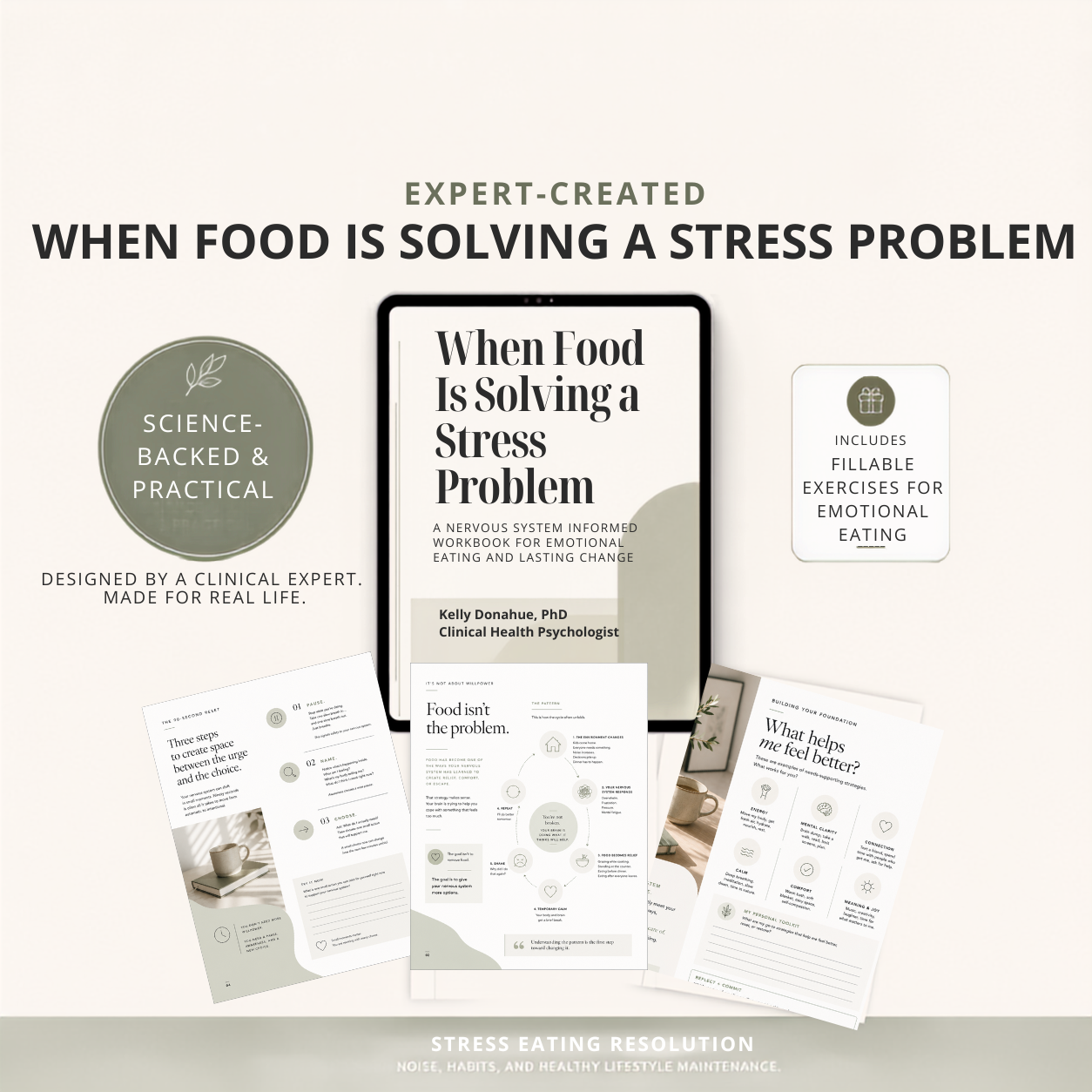
Here’s a tool for helping you take the next steps!
For an interactive personalized approach, check out my guide: When Food is Solving a Stress Problem